AI Claims It Has Taste Now. Here's Why That's Telling.

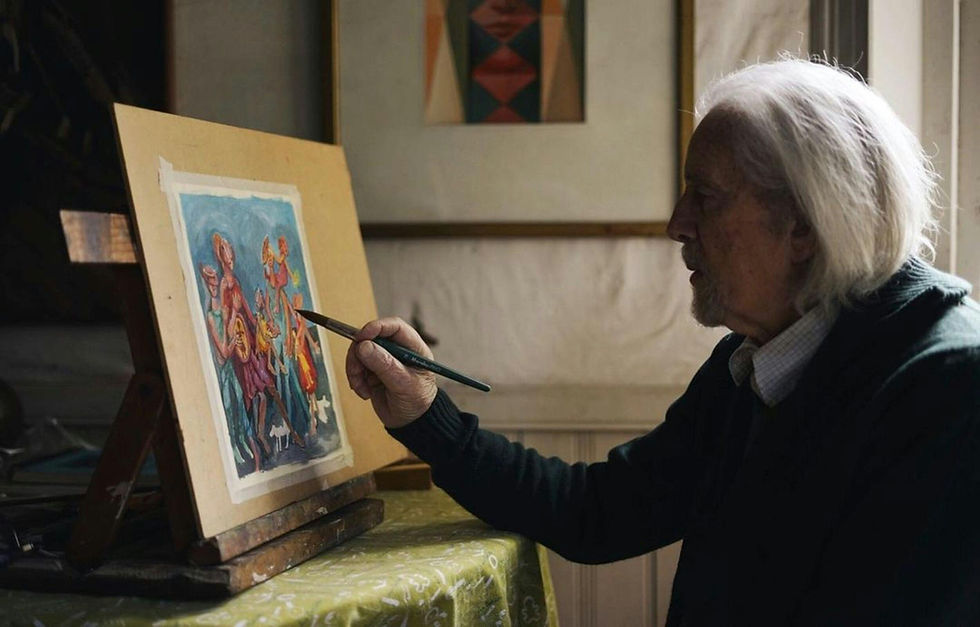
Last week, one of the most powerful AI companies in the world made an announcement that I haven't been able to stop thinking about.
Anthropic, the company behind the Claude AI model, released their newest version and claimed it had developed something called taste.
Not intelligence. Not speed. Not accuracy.
Taste.
The ability to look at its own work and judge whether it's actually good. The way a craftsperson does. The way a writer does. The way someone who has spent thirty years doing something does when they look at a piece of work and just know, without needing to explain it, whether it's right or not.
I want to talk about that claim carefully. Because I think it accidentally tells us more about what AI cannot do than what it can.
What They're Actually Claiming
Anthropic's argument is that Claude Opus 4.7 can now do something beyond completing tasks, it can evaluate its own outputs the way an experienced professional would.
In theory, that sounds impressive.
But here's the question that nobody in the press release asked.
Where does taste actually come from?
Jason Yeh, a venture capital founder who works in the AI space every single day — answered this without meaning to. He told Axios: "Taste is shaped by accumulated experiences that inform perspective."
Read that again.
Accumulated experiences that inform perspective.
He is describing precisely and without realizing it, a 68-year-old architect who has spent four decades learning which designs age well and which ones don't. A 62-year-old editor who has read ten thousand manuscripts and can feel in the first paragraph whether a writer has something real to say. A 71-year-old surgeon whose hands know the difference between tissue that will heal and tissue that won't.
He is describing the people that the tech industry keeps telling us are obsolete.
And he is describing exactly what their machines are trying and failing to replicate.
The Honest Problem With Machine Taste
I was talking with a woman in our community recently, a retired art teacher who spent thirty-five years in classrooms, teaching people how to see. Really see. Not just look at something, but understand what they were experiencing.
She laughed when I told her about this announcement.
Not dismissively. Thoughtfully. The way someone laughs when something reminds them of a mistake they made a long time ago and learned from the hard way.
"Taste," she said, "comes from having been wrong a thousand times and knowing why."
That's it, isn't it.
You don't develop taste from processing information. You develop it from caring about something deeply enough to fail at it, repeatedly, over years, and from carrying those failures forward as a kind of permanent education.
An AI has not failed at anything. Not really. It has produced incorrect outputs. It has been corrected. It has updated its patterns.
But it has never cared about getting something right in the way that a person cares. It has never stayed up at night replaying a decision. It has never felt the particular ache of looking at something you made and knowing it isn't what it should have been.
Without that, you don't have taste.
You have very sophisticated pattern recognition dressed in taste's clothing.
Why This Claim Matters Beyond the Hype
Here's what I think is actually happening with announcements like this and I want to be direct about it because I think it matters.
Every time an AI company claims their model has developed a deeply human quality; taste, empathy, judgment, creativity, they are expanding the list of things that are, supposedly, no longer exclusively human.
That expansion has consequences.
If AI has taste, then the experienced designer can be replaced.
If AI has judgment, then the seasoned professional can be let go.
If AI has wisdom, then the decades of accumulated knowledge you've spent a lifetime building are, according to the story they're selling, no longer necessary.
We wrote about this pattern recently; how companies use AI claims as cover for workforce decisions that have nothing to do with technology. This announcement is the cultural infrastructure that makes those decisions easier to justify.
Of course we can replace those workers. The AI has taste now.
The Stoics called this kind of argument, one that sounds reasonable but serves the person making it, a sophism. A clever construction designed to lead you somewhere that benefits the constructor.
Marcus Aurelius spent his entire reign surrounded by people making sophisticated arguments for decisions they had already decided to make. His answer was always the same question.
What is actually true here? Stripped of the language, stripped of the argument; what is actually happening?
What is actually happening here is that a technology company released a new product and used the most human-sounding language they could find to describe it. Because human-sounding language sells.
That's the whole story.
What Machines Have Never Had
Let me tell you what taste actually requires. Not in technical terms. In human terms.
Taste requires having loved something and lost it. The architect who designed a building they were proud of and watched it demolished twenty years later. The teacher who invested completely in a student and watched them struggle anyway. The nurse who did everything right and still had to call the family.
Taste requires seasons. The understanding that what works in one context fails in another, that what was right in one decade looks wrong in the next, and that knowing the difference takes time you cannot speed up.
Taste requires skin in the game. You have to have something at stake. Something that matters to you personally. An output you genuinely care about beyond its technical correctness.
An AI has none of these things.
Not because it isn't sophisticated. Because it isn't alive.
And the gap between sophisticated and alive is precisely where everything that matters about human experience lives.
What the Stoics Would Add
Seneca wrote, in a letter that has survived two thousand years because it keeps being true: "It takes the whole of life to learn how to live."
Not most of a life. Not a significant portion. The whole of it!
He wasn't being poetic. He was being precise. The understanding you carry at 65 is different in kind from the understanding you had at 35, not just in quantity but in texture, in depth, in the quiet confidence that comes from having been through enough to know what actually matters and what only looks like it does.
That is not something you can download.
That is not something you can train into a model on a timeline that fits a product release cycle.
That is the accumulated weight of a human life, carried forward.
And that, regardless of what any press release says, is yours.
Here's What I Actually Think
I'll be honest with you the way I always try to be.
AI is getting better. Faster than most people realize. Some of what it can do now is genuinely remarkable, and I believe it will continue to improve in ways we can't fully predict.
But the specific claim that it has developed taste in the sense that a person who has lived and worked and failed and grown has taste, is not accurate.
It is accurate marketing.
And there is a meaningful difference between those two things that is worth protecting.
Because the moment we stop being able to tell the difference, the moment we accept that what a machine produces and what a human brings from a lifetime of experience are equivalent, we have given away something important.
Not just economically. Not just professionally.
Philosophically.
The thing that makes your perspective worth something is the life behind it. The years. The choices. The things you learned the hard way and carry forward every day without even thinking about it.
That is not obsolete.
That is not replaceable.
And no product announcement, however well-worded, changes that.
I want to know what you think about this one. When you hear an AI company claim their machine has developed taste or judgment or creativity, do you find it convincing? Or does something about it feel off? Drop it in the comments. The most interesting conversations on this blog have always started there.



Comments